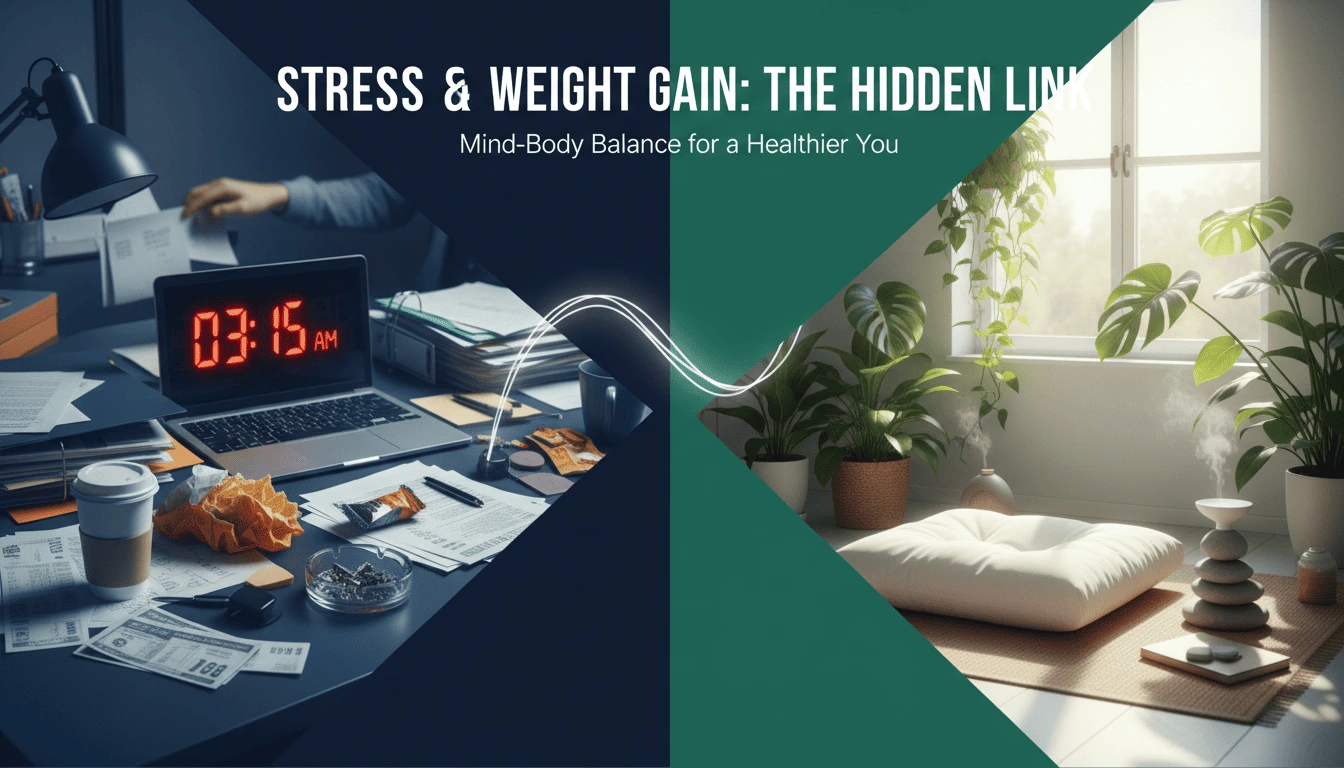
If you’ve ever noticed that you tend to gain weight during particularly stressful periods of your life — a demanding work project, a difficult relationship, or a major life transition — you’re not imagining it. The connection between chronic stress and weight gain is well-established in the scientific literature and operates through multiple overlapping mechanisms.
Understanding this connection isn’t about making excuses. It’s about approaching weight management with an accurate model of what’s actually happening in your body — and equipping yourself with evidence-based strategies to address root causes rather than symptoms.
The Hidden Weight of Modern Stress
Modern chronic stress is physiologically different from the short-term, acute stress our bodies evolved to handle. A brief encounter with a predator triggers a stress response that resolves quickly. Ongoing work pressure, financial worry, relationship strain, and constant digital stimulation keep stress hormones elevated for weeks, months, or years at a time.
This sustained activation of the stress response has profound consequences for metabolism, body composition, appetite, sleep quality, and food-related behaviors — all of which interact to create conditions favorable to weight gain.
The Cortisol Connection
Cortisol is the primary hormone of the stress response. In acute situations, it’s essential: it raises blood sugar for energy, increases heart rate, and sharpens focus. But when chronically elevated, cortisol becomes metabolically problematic in several ways:
- Promotes fat storage: Elevated cortisol signals the body to store fat, particularly visceral fat around the abdomen. Abdominal fat has more cortisol receptors than fat in other areas, creating a feedback loop that accelerates central fat accumulation.
- Increases appetite: Cortisol increases appetite directly and also stimulates production of neuropeptide Y (NPY), a potent appetite stimulator.
- Drives cravings for high-calorie foods: Stress specifically increases cravings for foods high in fat, sugar, and salt — foods that activate the brain’s reward circuitry and provide temporary relief from stress feelings.
- Slows metabolism: Chronically elevated cortisol can reduce muscle mass (by breaking down protein for energy), which lowers resting metabolic rate over time.
- Disrupts insulin sensitivity: Cortisol promotes insulin resistance, impairing the body’s ability to efficiently use glucose for energy.
Stress and Emotional Eating
Stress-driven eating — sometimes called emotional eating — is one of the most direct pathways between psychological stress and weight gain. When people are stressed, they often seek comfort in food, particularly calorie-dense foods that provide rapid pleasure through dopamine release.
This isn’t simply a lack of willpower. Stress depletes prefrontal cortex function (the brain region responsible for self-control and deliberate decision-making) while activating the limbic system (the emotionally reactive part of the brain). The result is a measurably impaired ability to make considered food choices.
Research has also shown that stress reduces sensitivity to normal satiety signals, meaning stressed individuals tend to eat more before feeling full compared to when they’re relaxed.
How Stress Disrupts Sleep and Weight
Stress and sleep are deeply interconnected, and both have significant effects on weight. Chronic stress impairs sleep quality by keeping the nervous system in an elevated state of arousal — light, fragmented sleep becomes common, and the restorative deep sleep stages are reduced.
Poor sleep, in turn, significantly disrupts hunger hormones. Ghrelin (hunger) increases and leptin (fullness) decreases with sleep deprivation, creating a physiological pressure to eat more. Studies show that even a single night of insufficient sleep can increase appetite by 300–500 calories the following day. Addressing stress is therefore directly relevant to improving sleep and, through it, improving hunger regulation and food choices.
Stress, Gut Health, and Metabolism
An emerging and fascinating area of research involves the gut-brain axis — the bidirectional communication network between your digestive system and your brain. Chronic stress alters the composition of the gut microbiome (the trillions of bacteria in your digestive tract) in ways that may impair nutrient absorption, increase intestinal permeability, and reduce the production of gut hormones that regulate appetite and metabolism.
Conversely, a healthy gut microbiome appears to buffer the physiological effects of stress. This highlights the interconnected nature of stress management, digestive health, and metabolic function.
Practical Ways to Reduce Stress
The good news is that stress management is a learnable skill, and numerous evidence-backed approaches can meaningfully reduce cortisol levels and their downstream effects on weight and metabolism.
Regular Physical Activity
Exercise is one of the most powerful stress reducers available. It metabolizes cortisol and adrenaline, triggers endorphin and endocannabinoid release, and improves mood and sleep quality. Both aerobic exercise and resistance training have demonstrated stress-reducing effects, but even regular walking reduces markers of stress and anxiety.
Mindfulness Meditation
A substantial body of research supports mindfulness meditation for reducing cortisol and perceived stress. Studies have also found that mindfulness-based interventions specifically reduce stress-driven eating and abdominal fat accumulation. You don’t need hours of daily practice — even 10–15 minutes of guided meditation has produced measurable effects in research trials.
Deep Breathing and Vagal Stimulation
The vagus nerve connects the brain to the gut and plays a key role in the relaxation response. Slow, diaphragmatic breathing (4–6 breaths per minute) activates the parasympathetic nervous system, counteracting the stress response within minutes. Box breathing, 4-7-8 breathing, and similar techniques are simple and highly effective in acute stress situations.
Social Connection
Social support is one of the most robust biological buffers against stress. Research consistently shows that people with strong social connections have lower cortisol responses to stressors and better overall health outcomes. Prioritizing meaningful relationships — even brief daily interactions — has measurable physiological benefits.
Time in Nature
Spending time outdoors, particularly in natural settings, has been associated with reduced cortisol, lower blood pressure, and improved mood. Even 20 minutes in a park has produced measurable reductions in salivary cortisol in controlled studies. Nature walks, green spaces, and outdoor exercise compound both the movement and nature-exposure benefits.
Reducing Stimulants
Caffeine and alcohol both affect cortisol and the stress response. Excess caffeine elevates cortisol (particularly when consumed in the afternoon or evening) and can worsen anxiety. Alcohol disrupts sleep architecture, which impairs recovery and amplifies the hormonal consequences of stress. Moderating both supports the hormonal balance needed for healthy weight management.
Integrating Stress Management into Daily Life
The most effective stress management isn’t a single technique used occasionally — it’s a lifestyle orientation that weaves multiple evidence-backed practices into daily routines. Morning light exposure, regular movement, consistent sleep timing, mindful eating, quality social connection, and occasional nature exposure create a lifestyle that is inherently more stress-resilient.
In this context, a supplement like AlkaSlim Premium Formula fits naturally into a broader strategy. While managing stress at the lifestyle level is essential, premium wellness support for metabolism and energy can help you feel your best during the inevitable challenging periods that life brings.
Also explore our guides on healthy habits for weight loss and morning habits for weight management for complementary strategies.
Support Your Wellness Journey Comprehensively
AlkaSlim Premium Formula supports metabolism and energy as part of a balanced approach that includes stress management, quality sleep, and regular movement.
Try AlkaSlim Today