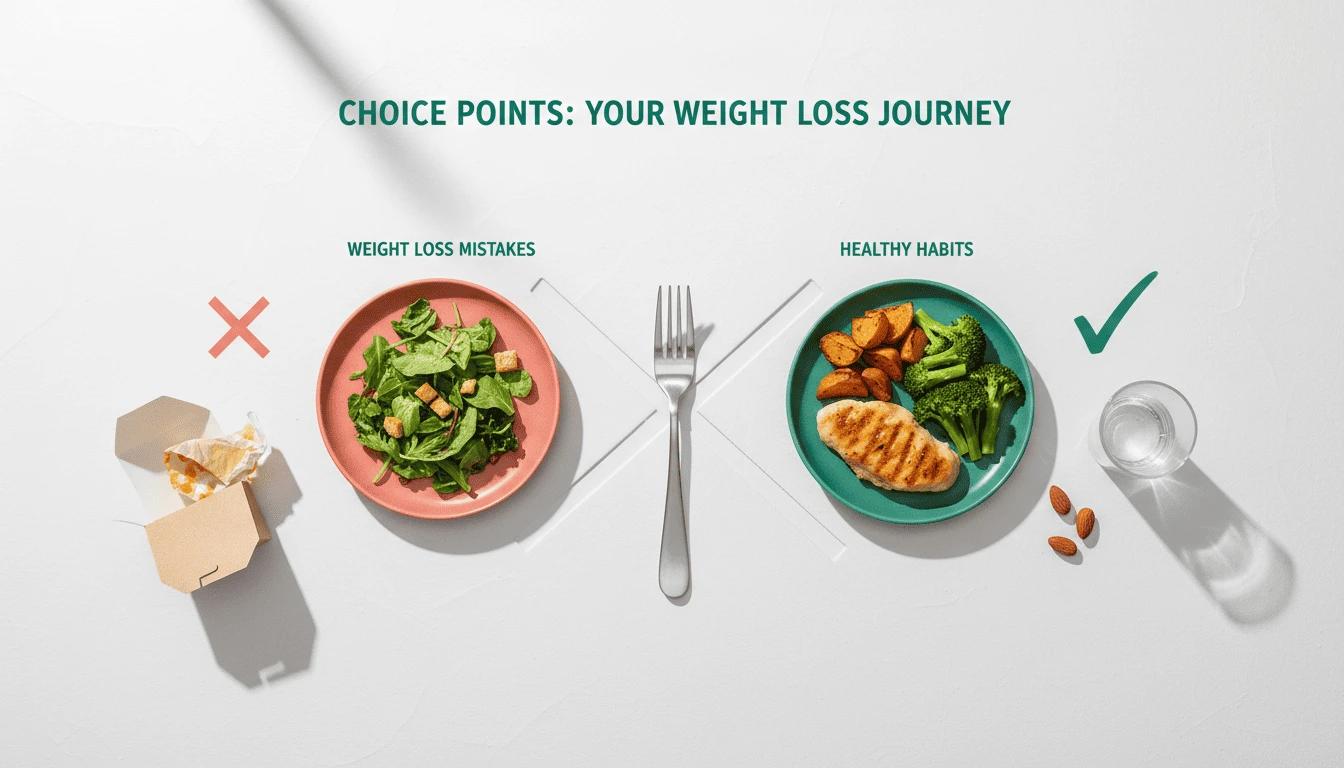
Weight loss is one of the most studied and yet persistently misunderstood areas of health and wellness. Millions of motivated people put genuine effort into changing their bodies and still don’t see the results they expect. Often, the issue isn’t effort — it’s approach. Here are 11 of the most common weight loss mistakes that research and clinical experience consistently identify as progress blockers.
1. Setting Unrealistic Expectations
The media frequently promotes dramatic transformations happening in weeks. In reality, evidence-based weight loss of 0.5–1 pound per week is generally considered optimal — fast enough to be motivating, slow enough to preserve muscle and metabolic health. Expecting 2–3 pounds per week consistently almost always leads to extreme restriction that backfires biologically and psychologically. Set expectations based on science, not marketing.
2. Underestimating Calorie Intake
Research repeatedly demonstrates that people significantly underestimate how many calories they consume — in controlled studies, by as much as 40–50% in some cases. This isn’t deliberate deception; it reflects genuine difficulty in accurately assessing portions and the calorie content of foods. Periodic food logging — even for just a week or two — can provide a reality check that dramatically clarifies your actual intake.
3. Skipping Resistance Training
Cardio alone is an inefficient approach to long-term weight management. Without resistance training, weight loss in a calorie deficit comes partly from muscle mass — which lowers your resting metabolic rate and makes future weight management harder. Resistance training preserves (or builds) muscle while losing fat, improving body composition and supporting a healthy metabolism for years to come.
4. Not Eating Enough Protein
Protein is the most important macronutrient for weight management. It has the highest thermic effect, the strongest satiety effect, and is essential for preserving muscle during calorie restriction. Research suggests 0.7–1g of protein per pound of body weight is appropriate for most active adults pursuing weight loss. Most people eat significantly less than this without realizing it.
5. Ignoring Sleep Quality
Poor sleep is one of the most common and most overlooked contributors to weight management struggles. Even one week of sleeping 5–6 hours per night instead of 7–9 can significantly elevate hunger hormones, increase cravings for high-calorie foods, and impair the decision-making that underlies consistent healthy choices. Treating sleep as a weight management priority, not a luxury, is essential.
6. Overcompensating After Exercise
Exercise is beneficial for many reasons, but its direct calorie burn is often overestimated. A 30-minute run might burn 250–350 calories — far less than the “treats” many people reward themselves with post-workout. Research on what’s called “exercise compensation” shows that people often increase calorie intake after exercise in ways that partially or fully offset the caloric expenditure. Be mindful of this tendency.
7. Following All-or-Nothing Thinking
One of the most destructive patterns in weight management is interpreting any deviation from plan as complete failure. “I ate the cookie, so the day is ruined” leads to a cascading effect where one small detour becomes a full derailment. Research in dietary restraint consistently shows that flexible eaters have better long-term outcomes than rigid ones. A single imperfect meal doesn’t matter — your pattern over weeks and months does.
8. Cutting Out Entire Food Groups
Eliminating carbohydrates, fats, or other food groups creates restrictive eating patterns that are difficult to sustain and can lead to nutritional deficiencies. More importantly, the resulting cravings for forbidden foods often trigger binge episodes that undermine any calorie deficit created. Well-planned dietary flexibility — rather than food group elimination — consistently produces better long-term compliance.
9. Focusing Only on the Scale
Body weight fluctuates by 2–5 pounds daily based on water retention, food volume, hormonal cycles, and other factors that have nothing to do with fat loss or gain. Over-relying on daily weigh-ins can create emotional roller coasters that derail motivation. Tracking weekly averages, body measurements, fitness performance, energy levels, and clothing fit gives a more complete picture of genuine progress.
10. Neglecting Stress Management
Chronic stress elevates cortisol, promotes abdominal fat storage, drives cravings for calorie-dense foods, disrupts sleep, and impairs decision-making. People who are managing significant stress while trying to lose weight face a measurably more difficult physiological environment. Stress management isn’t optional — it’s a core component of effective weight management.
11. Giving Up Too Soon
The final and perhaps most consequential mistake is abandoning sustainable approaches because results aren’t happening fast enough. Genuine body composition changes take time. Plateaus are normal and typically reflect water retention and glycogen storage changes rather than true stalls in fat loss. Consistency over 3–6 months — even when the scale seems stuck — produces results that shorter, more intense efforts rarely achieve.
Moving Forward with a Better Approach
Correcting these mistakes doesn’t require starting over — it requires adjusting your strategy. Increase protein, prioritize sleep, add resistance training, practice flexibility with food, and manage stress consistently. Alongside a quality formula like AlkaSlim Premium Formula to support metabolism and energy, these corrections can meaningfully change your trajectory.
Also read our articles on healthy habits for weight loss and natural weight loss tips for complementary guidance.
Avoid Mistakes. Build the Right Foundation.
AlkaSlim supports your metabolism, energy, and appetite as you build the habits and strategies that actually produce lasting results.
Try AlkaSlim Today